Why Some Clean Energy Stories Get Heard: And Others Don’t

Why Some Clean Energy Stories Get Heard: And Others Don’t
This country has no shortage of activity in the clean heat sector. We see this first-hand through the organisations and partners we work with.
But much of that progress never travels beyond the immediate audience.
We realised: many clean energy projects have a communication problem.
They simply don’t get picked up, shared, or understood in a way that builds wider momentum around the transition to clean heat.
And that matters.
Because the decarbonisation of heating goes beyond meeting net zero targets. It’s about shifting how energy is generated, distributed, and controlled: moving towards systems that are more local, more stable, and less exposed to global volatility.
As questions of energy costs and resilience move closer to home for everyone, helping people understand the role of clean heating - and increasingly clean cooling too - becomes far more important. The CCC now expects temperatures above 40°C to become common in the UK by 2050, with around nine in ten homes at risk of overheating. Building wider public understanding around these systems is what will inspire the grassroots enthusiasm we need for the transition.
Ultimately, if the story doesn’t land, the impact is limited - no matter how strong the underlying solution is, or the arguments for adopting it are.
Here’s our thoughts on addressing that challenge.
What Gets Picked Up - And What Doesn’t
From our work and connections to government, industry bodies, and media, we see a clear pattern in the types of stories that gain traction.
They are not necessarily the most technically advanced. They are the most tangible, credible, and relevant to people’s lives.
Gets Picked Up
- Cost impact
- Energy security
- Recognisable places
- Human relevance
- Trusted voices
Gets Ignored
- Technical specifications
- Abstract systems
- Policy language
- Generic Net Zero framing
- Internal messaging
The Clean Energy Story Scorecard
Before publishing any content or comms in clean energy, it’s worth stepping back and asking a simple question:
Would this story land beyond our sector?
This scorecard is designed to help you answer that.
1. Outcome First
Does the story lead with real-world impact?
Strong stories focus on what changes as a result of the project:
- Lower energy costs
- Greater stability
- Improved services
Weak stories lead with technology or system design.
2. Real-World Anchor
Can someone immediately picture who this affects?
Strong stories include:
- Named organisations
- Recognisable locations
- Clear use cases
Without this, the story remains abstract.
3. System Connection
Does the project link to something bigger?
Strong stories connect to:
- National policy
- Infrastructure shifts
- Market trends
This signals relevance and long-term importance.
4. Human Relevance
Does it connect to what people actually care about?
Carbon reduction matters, but it rarely stands alone.
Stories that land also connect to:
- Cost of living
- Public services
- Economic resilience
5. Trusted Voices
Are there credible, external voices included?
Trust builds faster when stories include:
- Institutions
- Operators
- End users
Not just internal commentary.
Example: A Clean Heat Story That Lands
Headline
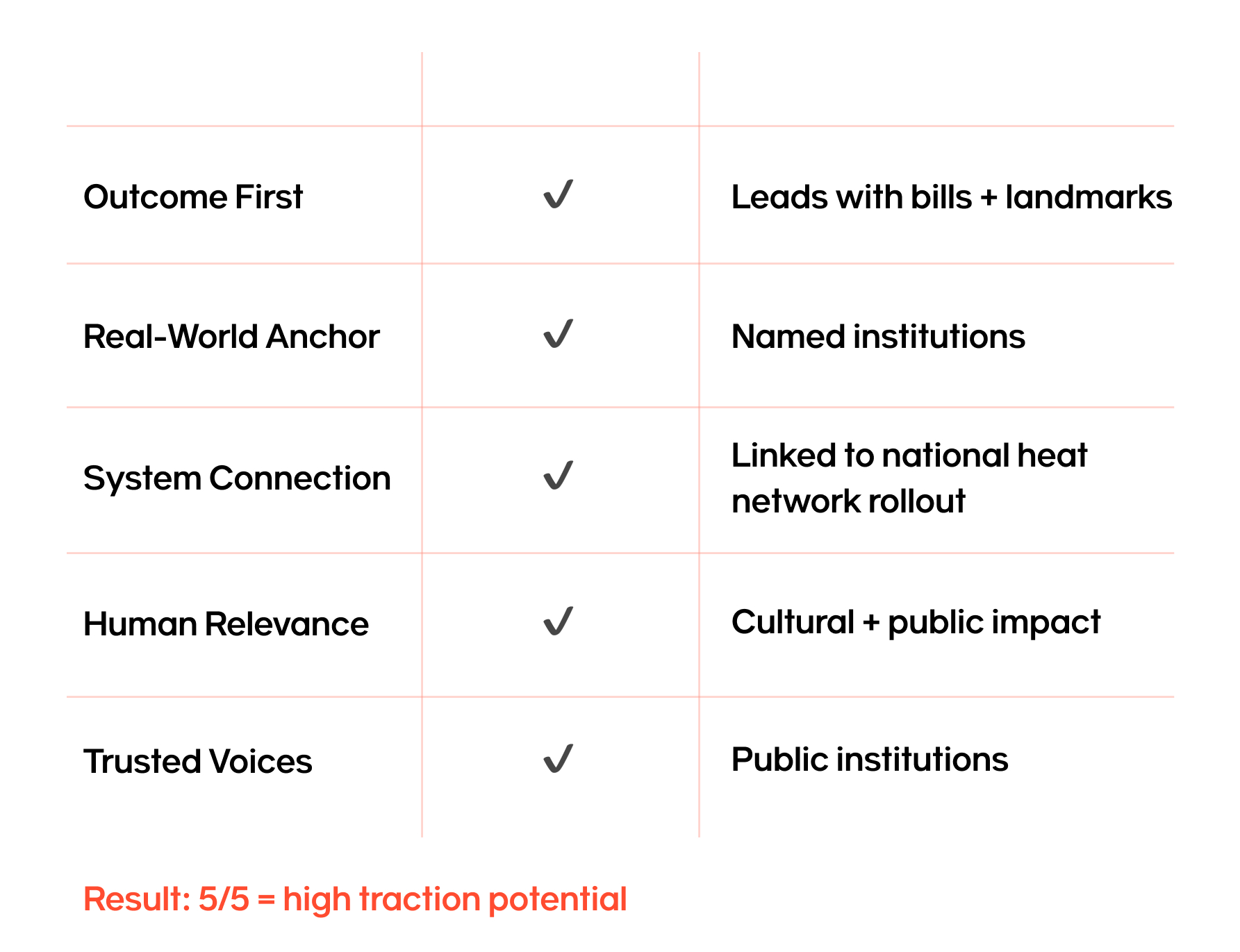
River heat network to warm London landmarks and cut energy bills
The Story (Summarised)
A water-source heat network in the Thames will provide low-carbon heating to major institutions including the Southbank Centre, King’s College London, and the National Theatre.
The system captures low-grade heat from the river and distributes it across a district network, replacing fossil-fuel heating with a locally sourced energy solution.
For the organisations involved, the impact goes beyond emissions. Rising energy costs have placed pressure on budgets across cultural and public institutions. More stable, lower-cost heating infrastructure creates the potential to redirect funding into core services such as education, research, and public access.
Scorecard Breakdown
Why Most Stories Miss
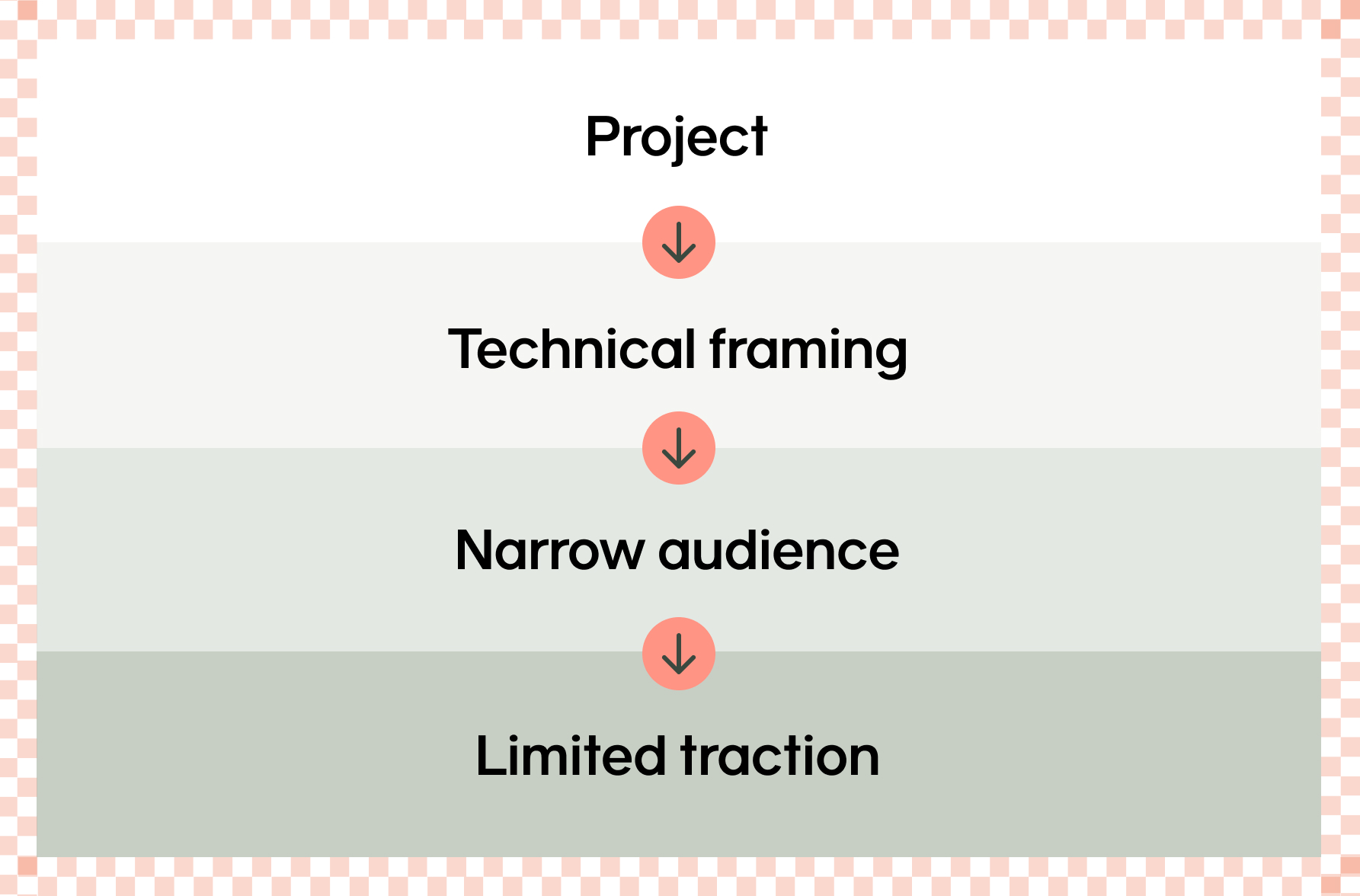
Many projects fall short for the same reasons:
- They lead with engineering detail
- They stay at a policy or system level
- They lack a clear human anchor
- They don’t connect to a wider shift
As a result, they remain technically correct - but strategically invisible.
In a sector where adoption depends on understanding, communication becomes part of the infrastructure itself.
The difference isn’t the project; it’s how the story is framed.
If your story isn’t landing, it’s worth fixing.
Download the scorecard for your clean heat comms fix.
And for a more in-depth insight into communicating in the decarbonised heating sector, explore the full guide: How Clean Heat Brands Get Heard.