Clean Heat, Clear Stories
Why some projects get picked up - and others quietly disappear
A lot of clean heat stories simply aren’t being heard.
Not because the projects - whether in ground source heat pumps, deep geothermal, or next-generation heat networks - aren’t strong, but because they’re not connected to narratives that actually matter to people.
So while the heat transition is moving forward across the country, much of that progress never gets heard about beyond the sector.
It doesn’t get picked up, shared, or understood in a way that builds wider momentum around the energy transition.
And that’s a problem for anyone working in the space.
Why That Matters
The decarbonisation of heat is about more than emissions.
It’s about shifting how energy is generated, distributed, and controlled - moving towards systems that are more local, more stable, and less exposed to global volatility.
Fossil fuels require continuous extraction. Once burned, the energy is used, emissions are released, and the cycle starts again.
Clean energy systems work differently. They rely far more on upfront infrastructure, with the potential for reuse, efficiency gains, and increasingly circular material systems over time.
That shift changes the long-term relationship between cost, control, and dependency. And it will change people’s lives and deliver us all a more secure future.
But that’s not always the story people hear.
The Gap
Too often, clean heat brands position their work in overly technical terms: which matters for engineers, procurement teams, and delivery partners.
But we need clearer stories about the real-world benefits of clean heat - stories that build grassroots enthusiasm and counter the well-funded, over-amplified scepticism around it. (How many people outside the sector really understand what a TWh means in practical terms?).
As advocates for the energy transition, we need to drive enthusiasm for widespread adoption of clean energy first… then create deeper understanding.
If the story doesn’t land, the impact is limited - no matter how strong the underlying solution is.
What We Want to Get Heard
Government departments, industry bodies, and media organisations are actively looking for clean heat stories that reinforce a small number of themes…
Themes that connect with people’s daily lives and everyday concerns:
- Secure, home-grown energy (increasingly front of mind)
- Protection for bill payers
- Jobs, skills, and regional growth
Projects that align with these narratives are far more likely to gain traction. Others - just as valid technically - are likely to be overlooked.
The Fix
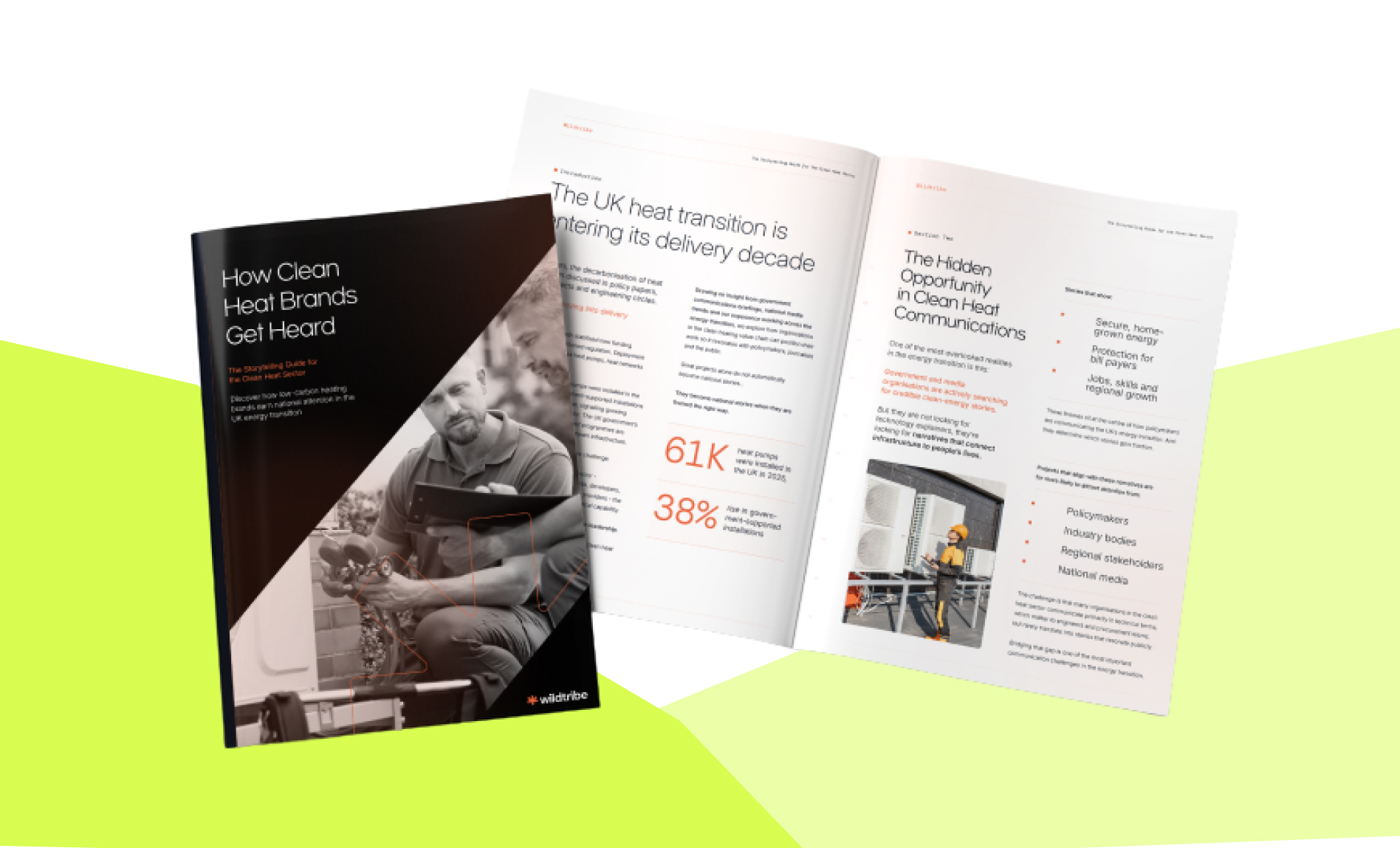
We’ve pulled together a short, practical guide to help clean heat brands bridge the current gap we see between intent and impact.
How Clean Heat Brands Get Heard breaks down:
- The narratives policymakers and industry bodies are actively reinforcing
- What makes a story amplifiable
- How to frame projects so they resonate beyond technical audiences
- A simple scorecard to test whether your story is likely to land
It’s built on the patterns we’re seeing every day: what gets published, what gets shared, and what starts to shape the wider narrative.
If you’re creating case studies, campaigns, or project communications in clean heat, it’s worth getting your storytelling right.