The Future of Heat: What Policymakers, Engineers, and the Public Need to Hear in 2026
In this article
Join our newsletter
Marketing tips and tricks
Thank you for your submission!
The Future of Heat: What Policymakers, Engineers, and the Public Need to Hear in 2026
2026 will be a defining year for the UK’s heating transition - not because of a single policy announcement or technology breakthrough, but because the narrative is finally shifting.
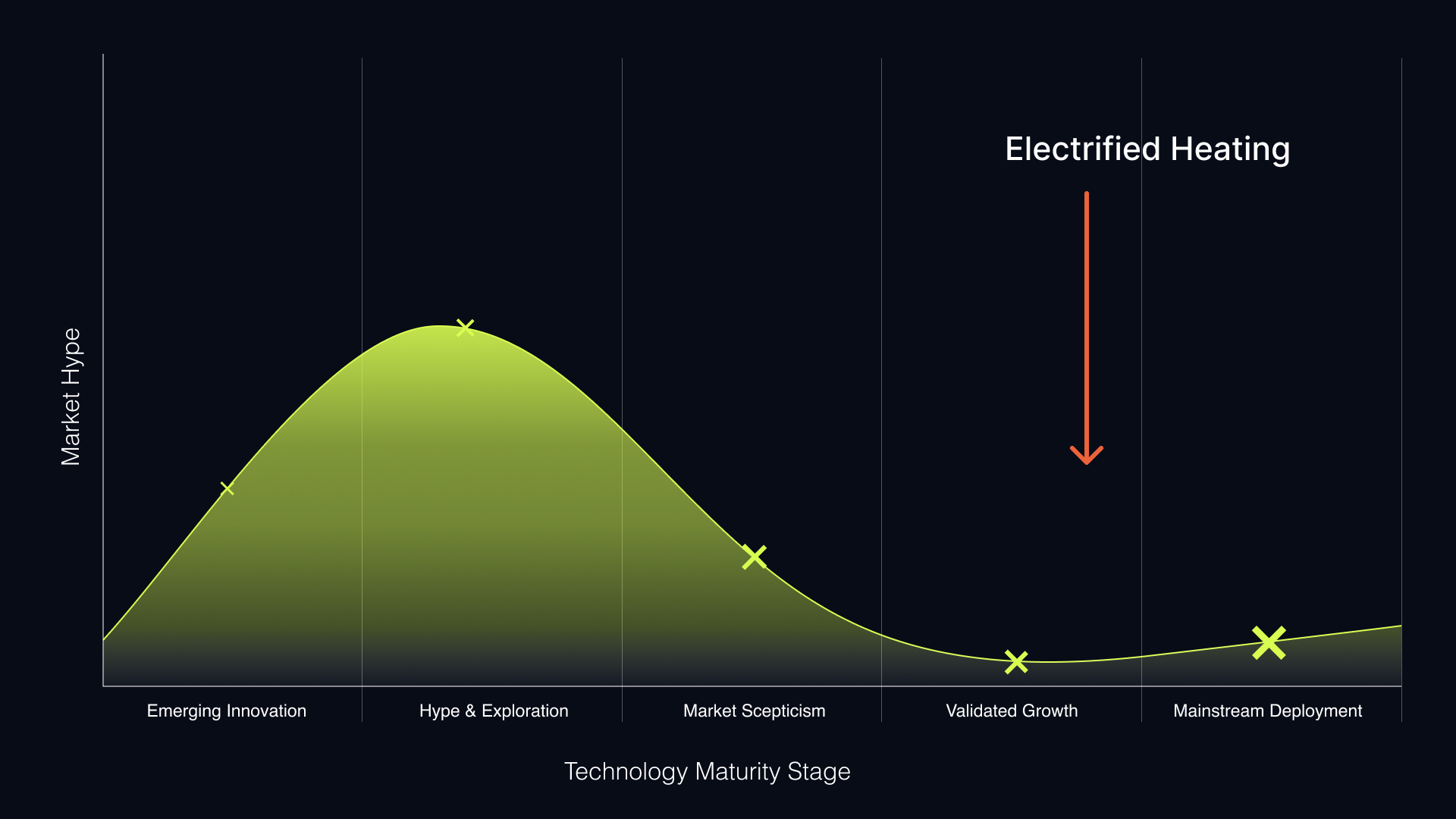
Heating has always been a complex corner of the transition — highly technical, slow to legislate, and easy to misunderstand. But the market is shifting. According to the Net Zero Tech Curve, low-carbon heating is moving out of the early-adoption phase and into the first stage of mainstream uptake. That shift changes everything: messaging, investment, supply chain confidence and public expectations.
This is what the sector needs to communicate clearly in 2026.
1. The UK’s Heat Transition Has Entered Its ‘Delivery Decade’
2025 quietly delivered some of the most significant progress the sector has ever seen. Here are just a few highlights:
- Consumer protection is now in place, with advice, advocacy and Energy Ombudsman roles in place ahead of the 2027 authorisation regime.
- HNES improvements reached 181 heat networks, improving efficiency for 27,500 residents and cutting carbon equivalent to almost 2,000 flights from London to New York each year.
- The Green Heat Network Fund (GHNF) accelerated deployment with £224m awarded to 21 new low-carbon schemes powered by heat from rivers, sewers, energy centres and data centres.
- Heat Network Technical Assurance Scheme (HNTAS) milestones were achieved: draft technical standards released, the new-build pilot completed, and training courses launched. (Confirmed standards slated to land in January 2026.)
- Advanced Zoning schemes emerged in Leeds, Plymouth, Bolton, Trafford, Stockport, the City of London and Liverpool.
- The skills pipeline expanded, with 3,149 individuals trained through the Heat Training Grant.
These are major signals that the UK is moving into coordinated, scaled deployment and that the heat market is maturing quickly.
2. Policymakers Need to Prioritise Stability and Public Confidence
The next phase will succeed if 2026 delivers clarity, predictability and visible leadership.
Key messages for policymakers:
- Explain the consumer protection story clearly. Confidence grows when households understand their rights, how redress works and why standards are tightening.
- Use zoning to guide investment. Local authorities, developers and operators need straightforward signals on where schemes will happen and when.
- Support the expanding skills pipeline. The training momentum is encouraging, but demand will multiply as more networks come forward.
- Share progress consistently. The sector benefits when central government communicates achievements rather than focusing only on future challenges.
A stable narrative strengthens investor confidence and gives local authorities and developers the courage to move faster.
3. Engineers and Delivery Partners Should Lean Into the Market Signals
While technical excellence remains essential, market dynamics are now just as influential:
- Authorisation deadlines shape design choices made today.
- Major urban procurement rounds are accelerating.
- Public estates show rising demand for low-carbon heat.
- GHNF funding rounds continue to set the pace for development.
Delivery teams have an opportunity to shape public understanding through openness about lessons learned, performance improvements and innovations emerging from HNES and HNTAS. Engineers don’t need to market themselves, but they do need to communicate value and reliability far more clearly.
4. The Public Needs a Simpler, More Reassuring Story
People want to know their heating will be affordable, reliable and fair. They don’t need technical diagrams or system complexity. They simply need confidence.
What the public needs to hear in 2026:
- You’ll have more protection and redress than ever before.
- Your heating will be cleaner, more reliable, and increasingly affordable.
- Your local authority will have clearer plans and clearer responsibilities.
- You won’t be left behind.
- British jobs, British skills, and British engineering are driving this transition.
The core framing applies here: emphasise lower bills, stronger energy security and long-term economic value.
The Narrative for 2026
The UK is entering a period where clean heat deployment will scale rapidly. Standards are rising, funding is flowing and consumer protections are catching up. The sector must now speak with consistency and clarity.
Wildtribe’s role is to help organisations communicate this progress, counter noise and provide the clear, confident story that accelerates uptake and strengthens trust.
Follow our updates as the year progresses by subscribing to The Buzz - our monthly drop of sector know-how.
And if you think we can work together this year…
Let's shape what's next.
Whether you're redefining your organisation, entering new markets or leading change across the energy transition we can build the trust, alignment and momentum needed to communicate your next chapter with confidence.