Four Key Messages for Renewable Energy Marketing

In this article
Join our newsletter
Marketing tips and tricks
Thank you for your submission!
Marketing in any sector begins with knowing who your target audience is, what they want and how they’ll decide what represents the best fit for their needs.
Across renewable energy, those audiences might be developers, investors, procurement teams, policymakers, communities or ultimately energy consumers. But the same principle applies: understand what matters to them, how your solution delivers against those priorities and how you can communicate that clearly and credibly.
Amazon founder Jeff Bezos might not be everyone’s cup of tea, but there’s a useful principle behind one of his best-known observations. Businesses spend a lot of time asking what will change over the next ten years, when there is just as much value in asking what won’t change - because those enduring priorities are things you can build a strategy around.
That idea has particular relevance for renewable energy marketing.
What are the four key messages for renewable energy that aren’t going to change?
When we first explored this subject, DNV research highlighted four qualities energy consumers valued particularly highly: secure, reliable, accessible and affordable energy.
Several years on, those priorities haven’t disappeared. If anything, developments across the energy sector have reinforced them.
The transition itself continues to accelerate in important areas. DNV forecasts solar and wind reaching 32% of the global power mix by 2030, while solar PV alone is expected to provide 20% of global electricity by 2029. At the same time, grid development is struggling to keep pace with electrification, geopolitical uncertainty has pushed energy security higher up the agenda, and rapidly growing electricity demand is creating new infrastructure challenges.
The IEA describes this wider shift as the emerging “Age of Electricity”, with electricity becoming increasingly important to economic competitiveness, energy security and decarbonisation.
For businesses across renewable energy and cleantech, that creates an important communications challenge. A technology may be lower-carbon, but customers, investors and project partners still need confidence that it can deliver what they need in the real world.
That means understanding and answering four enduring questions.
Is it secure? Is it reliable? Is it accessible? Is it affordable?
These aren't simply selling points. They're questions your marketing and communications need to answer.
Secure – renewable energy
Energy security has moved from a background concern to one of the defining issues of the energy transition.
Geopolitical conflict, volatile global fuel markets, concentrated manufacturing supply chains and growing electricity demand have changed how governments and businesses think about where energy comes from and how resilient that supply really is.
DNV describes a growing focus on energy security that is encouraging countries to reduce dependence on imported energy and develop domestic sources of supply. In many markets, that can support rather than compete with the transition towards renewable electricity.
From a renewable energy marketing perspective, transparency is key. What security concerns does your audience have? How does your technology, project or service help address them? Where are the dependencies and risks, and what are you doing to manage them?
Some of the questions worth addressing include:
- Geopolitical and market instability: How exposed is the customer to global fuel markets, political disruption or price volatility, and can your solution reduce that exposure?
- Supply-chain resilience: Where are components and materials sourced? Are there concentrated dependencies within the supply chain, and how are these being managed?
- Climate resilience: Can the technology and associated infrastructure continue operating effectively through high winds, extreme temperatures, flooding or other changing weather conditions?
- Infrastructure resilience: What happens when equipment fails or infrastructure is disrupted? What contingency, redundancy and maintenance provision is built into the solution?
- Long-term energy availability: How does the solution contribute to a secure supply of energy as electricity demand grows and more parts of the economy electrify?
The answer will differ enormously between technologies. The important thing is not to assume that because something is renewable, your audience automatically sees it as secure.
Reliable – renewable energy
Reliability has always mattered to energy customers. What is changing is the way we need to talk about it.
Renewable energy reliability is increasingly a whole-system question. Wind and solar output varies, but generation is only one part of the picture. Storage, grid capacity, interconnection, demand flexibility, digital management, maintenance and complementary technologies all contribute to whether energy is available when and where it is needed.
The IEA argues that increasing electrification requires generation, grids, storage, digital capabilities and flexibility to develop together, with grid infrastructure needing to expand and modernise significantly as electricity demand grows.
For individual renewable energy businesses, reliability also means demonstrating the credibility of the organisation itself: its expertise, experience, technology and ability to deliver over the lifetime of a project.
Questions your communications may need to answer include:
- System flexibility: How does your technology or service respond to variable generation, changing loads and periods of peak demand?
- Durability: Which components are likely to wear out, how easily can they be replaced and how does the technology perform in challenging environmental conditions?
- Lifespan: How long will the solution operate effectively, how does performance change over time and when is significant refurbishment or replacement likely to be needed?
- Operation and maintenance: What does it cost to maintain the system, what support is required and what does the customer need to budget for over its lifetime?
- Skills and support: If something goes wrong, who can fix it? What specialist skills are required, how quickly can support be accessed and what measures minimise downtime?
Claims around reliability become far more powerful when they're backed by evidence: operating data, project experience, warranties, certifications, case studies and measurable performance.
Accessible – renewable energy
A technology can be proven, cost-effective and technically suitable and still be difficult to deploy.
That makes accessibility about much more than whether a renewable technology exists. Planning and permitting, grid connections, financing, supply-chain availability, skills and physical site constraints can all determine whether a solution is genuinely available to the customer.
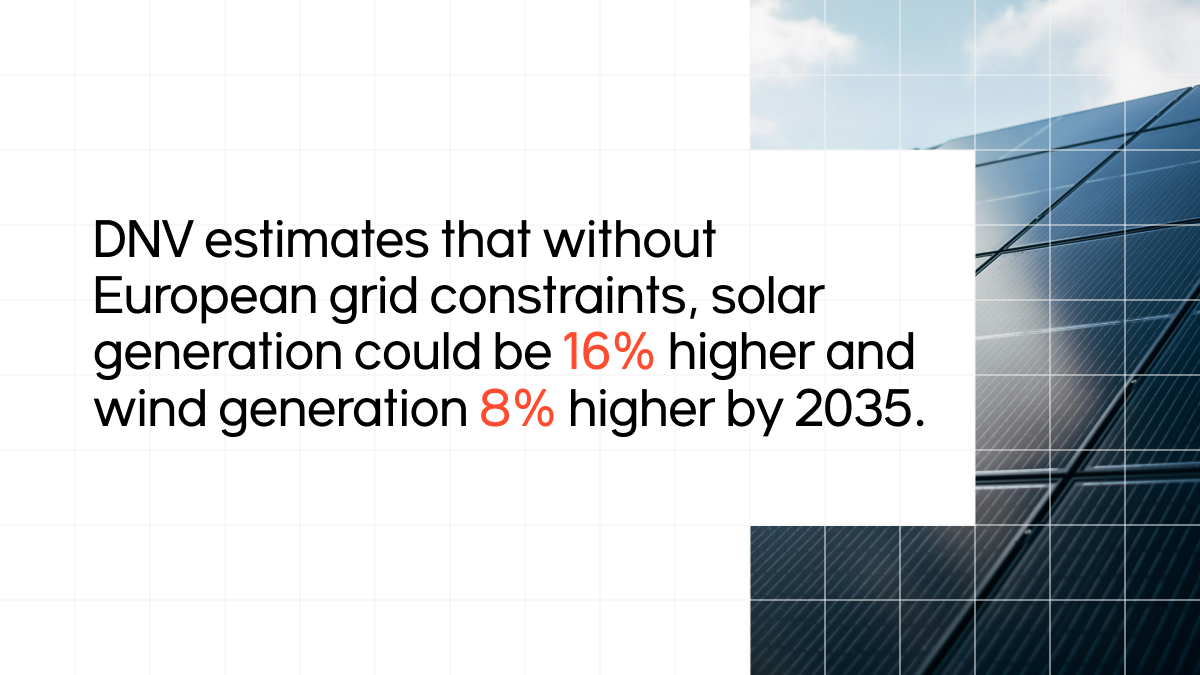
This has become particularly important as electrification accelerates. DNV identifies grid build-out as a major constraint on the transition, estimating that without European grid constraints, solar generation could be 16% higher and wind generation 8% higher by 2035.
So when marketing a renewable energy technology or service, don't stop at explaining what it can do. Help the audience understand what it will take to deploy it.
- Technology feasibility: Considering planning, environmental conditions, energy demand, grid availability and the nature of the site or building, is the technology genuinely feasible?
- Project suitability: Every project has different requirements around budget, timeframe, performance and available skills. Where is the solution a particularly strong fit — and where isn't it?
- Planning and connections: What permissions, licences or grid connections are required? How long could they take and how should they be factored into the project programme?
- Practical requirements: What space, infrastructure, building adaptations, safety measures or supporting technology will be required?
- Skills and supply chain: Are the people, components and specialist services needed to install and operate the technology readily available?
Depending on your target audience, levels of technical knowledge will vary enormously. The energy sector is complex and people only know what they know. Good communications anticipate the questions and make complexity easier to navigate without pretending it doesn't exist.
Affordable – renewable energy
Whether you're providing solar PV to homeowners, heat pumps to commercial buildings or infrastructure for utility-scale energy projects, the affordability conversation will inevitably happen.
But affordability is about far more than the initial price.
The relevant comparison might be installed cost, lifetime cost, payback, operating expenditure, financing, exposure to future energy prices or the cost of not investing. Different audiences will also define value differently.
The IEA identifies the higher upfront costs of many electric technologies as an important barrier to adoption, even where greater efficiency can create lower lifetime operating costs.
For organisations investing in decarbonisation, affordability can also sit alongside wider considerations including resilience, compliance, reputation and long-term competitiveness.
Key questions include:
- Initial cost: What upfront investment is required, and how does it compare with the alternatives?
- Lifetime cost: What will the technology cost to operate and maintain throughout its useful life, and where can efficiencies or savings be demonstrated?
- Storage and supporting infrastructure: Does deployment require batteries, grid upgrades, building adaptations or other supporting technology that changes the overall business case?
- Payback and financial risk: What is the expected payback period, what assumptions underpin it and how sensitive is it to changing energy prices, utilisation or financing costs?
- Access to finance and support: What funding, finance models or other mechanisms could make adoption more achievable for the target customer?
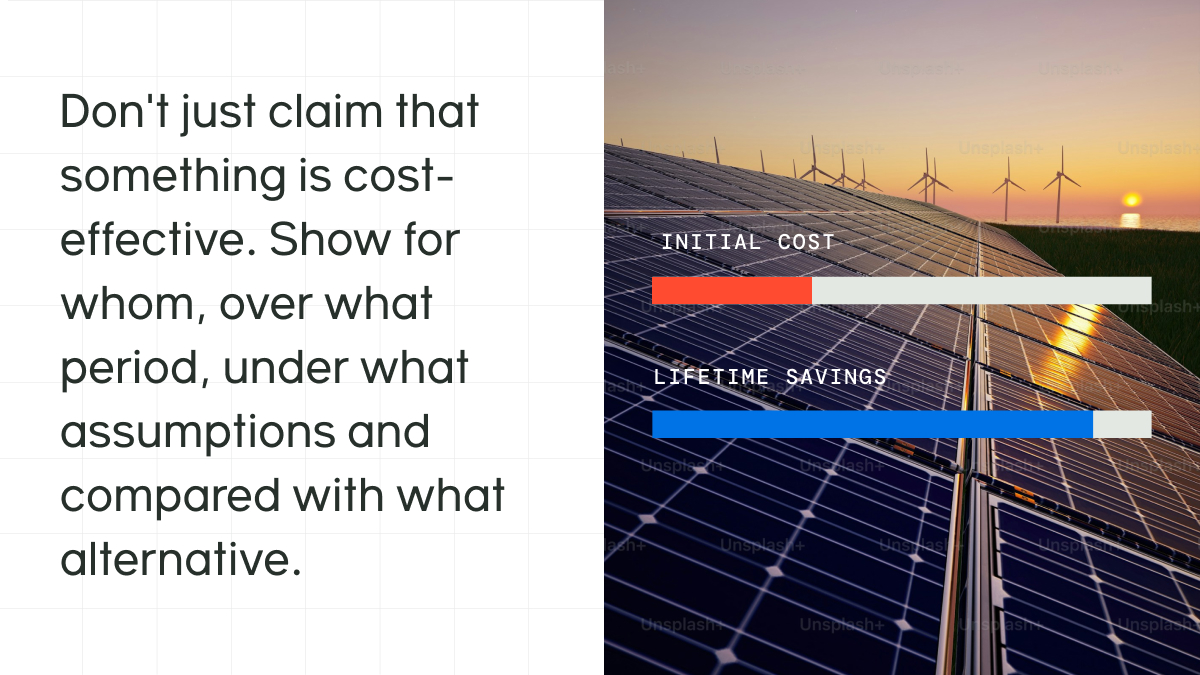
The marketing lesson here is simple: don't just claim that something is cost-effective. Show for whom, over what period, under what assumptions and compared with what alternative.
Why does knowing this matter for renewable energy marketing?
For organisations operating across renewable energy and cleantech, secure, reliable, accessible and affordable are fundamental questions audiences need answered before they can have confidence in a technology, project or business.
Effective renewable energy marketing starts by understanding which of those questions matter most to each audience, then providing the evidence to answer them clearly. That might mean demonstrating system reliability to a developer, lifetime cost to a procurement team, supply-chain resilience to an investor or the local impact of a project to a community.
And those conversations are becoming more complex. Technologies are competing for investment, electricity demand is increasing, grids are under pressure and questions around affordability, infrastructure and energy security increasingly sit alongside the environmental case for change.
Communication matters here because the evidence itself can be complicated while competing narratives are often extremely simple. Clear, credible communication helps organisations explain that complexity without losing the audience - and gives people the information they need to make informed decisions.
That's why renewables marketing is about more than promoting technologies. Done well, it helps organisations demonstrate credibility, differentiate their proposition, build trust and turn technical potential into real-world adoption.
Frequently asked questions about renewable energy marketing
What is renewable energy marketing?
Renewable energy marketing is the process of positioning and communicating renewable energy technologies, projects and services to the audiences that influence their adoption. It can include brand strategy, content marketing, digital campaigns, PR, thought leadership, stakeholder communications and sales enablement.
What matters most when marketing renewable energy?
Effective renewable energy marketing needs to address the questions audiences actually use to make decisions. Security, reliability, accessibility and affordability are important considerations alongside sustainability, performance and the credibility of the organisation delivering the solution.
The relative importance of each will depend on the audience and technology, which is why good renewable energy marketing starts with understanding who you're communicating with rather than simply broadcasting the benefits of the product.
Why is trust important in renewable energy marketing?
Renewable energy decisions can involve unfamiliar technologies, significant investment, complex infrastructure and long-term commitments. Clear evidence, credible claims, relevant proof points and transparent communication help audiences understand both the benefits and practical implications of a solution.
Trust becomes particularly important in a sector where people encounter conflicting claims about energy technologies, costs and the wider transition.
How is cleantech marketing different from general B2B marketing?
Cleantech marketing often involves technically complex products, developing markets, regulation, infrastructure dependencies and multiple stakeholder groups. A clean tech marketing agency therefore needs to understand both the technology and the commercial and communications environment surrounding it.
The challenge isn't simply making complex technology sound simple. It's identifying what different audiences need to understand and communicating it accurately, clearly and persuasively.
What should businesses look for in a renewables marketing agency?
Look for an agency that understands the energy sector as well as marketing itself. Sector knowledge helps a renewables marketing agency understand technical propositions, buyer concerns, market context and the evidence needed to communicate credibly with customers, investors, employees and other stakeholders.
It should also be able to connect communications disciplines rather than treating brand, marketing, PR, thought leadership and organisational communications as completely separate activities.
Strategic communications for the energy transition
Wildtribe is a brand, marketing and communications agency for the energy transition. We help organisations align their strategy, people and market position, bringing together brand, marketing, PR and internal communications to build trust and support growth.
If you're looking for a renewables marketing agency or clean tech marketing agency that already understands the sector, its technologies and the challenges shaping the transition, we'd love to talk.
Talk to the Wildtribe team about your marketing and communications.
Let's shape what's next.
Whether you're redefining your organisation, entering new markets or leading change across the energy transition we can build the trust, alignment and momentum needed to communicate your next chapter with confidence.